
Many dungeon boss encounters are designed around periodic add spawns that introduce short-term but extremely lethal threats. Dungeon Boss Focus Switching is the critical Threat Prioritization Layer that governs how quickly and decisively the group pivots damage away from the boss. Mastery of this layer separates groups achieving Clean Add Neutralization—killing priority targets within their intended window—from those suffering Persistent Add Pressure, where delayed reactions allow mechanics to stack and overwhelm the group.
This expanded analysis explains why add windows exist, how focus switching directly affects healer and tank stress, and which execution habits guarantee safe transitions back to boss damage.
Why Add Windows Exist
Dungeon designers use adds to enforce damage discipline. These enemies are rarely dangerous due to raw health, but because of timers: casts that must be stopped, buffs that must be prevented, or damage ramps that quickly exceed healer capacity. The add exists to test whether the group can correctly reassign priority under pressure.
Target Neutralization means the add dies before its mechanic fully resolves. When this happens, the encounter flow remains stable and predictable. Failure to meet this window creates Persistent Add Pressure, where the fight becomes harder every second the add remains alive.
The Cost of Tunneling the Boss
Boss tunneling is the most common failure mode during add phases. DPS players often hesitate to switch because they fear losing uptime, desynchronizing cooldowns, or dropping boss damage. In reality, this hesitation causes a net loss of efficiency.
When adds survive too long, healers are forced into constant emergency healing, tanks must burn defensives earlier than planned, and DPS uptime on the boss drops anyway due to deaths or forced movement. What appears to be “greedy optimization” quickly becomes structural failure.
The Focus Switch Protocol
Clean focus switching relies on a rigid, rehearsed response pattern. The moment an add spawns, the group executes the switch without discussion or hesitation:
- Immediate Target Lock: All DPS acquire the designated add target (usually marked with Skull) within the same global cooldown.
- Front-Loaded Burst: Short cooldown abilities, instant procs, and on-demand burst are spent immediately to compress the add’s lifespan.
- Control Support: Tanks and utility classes apply stuns, grips, or knockbacks to stabilize the add and prevent it from executing casts during the burst window.
How Delay Creates Persistent Pressure
Every second of hesitation multiplies the add’s impact. The damage curve is not linear; many adds ramp, channel, or enable additional mechanics if they survive beyond their intended lifespan.
| Switch Quality | Immediate Outcome | Compounding Effect |
|---|---|---|
| Instant Switch | Add dies before first full cast. | Fight returns to stable boss-only state. |
| Fragmented Switch | Add lives through one mechanic. | Healer cooldowns consumed early. |
| Late or No Switch | Add completes multiple mechanics. | Overlapping damage leads to wipe. |
The Resume-to-Boss Discipline
Just as important as the switch is the return. Once the add is dead, DPS must immediately re-acquire the boss and resume their rotation without hesitation. Lingering, target confusion, or waiting for movement adjustments wastes valuable uptime.
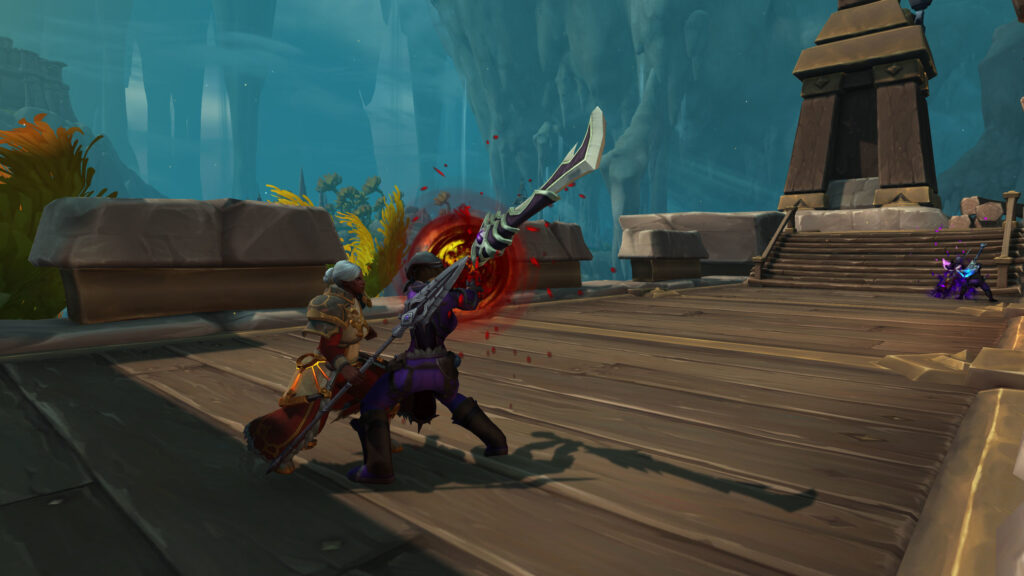
High-performing groups treat add deaths as hard transition points: add dies, boss damage resumes on the very next global cooldown. This minimizes the total encounter duration and preserves cooldown alignment.
Conclusion
Dungeon Boss Focus Switching is a decisive Threat Prioritization layer in modern dungeon design. By executing instant, unified switches and committing burst damage to temporary adds, teams achieve Clean Add Neutralization and preserve encounter stability.
This discipline prevents the healer exhaustion, tank stress, and cascading failures associated with Persistent Add Pressure, turning chaotic boss fights into controlled, repeatable clears.